

Wow, was Saturday a great day.
After feeling terrible and contagious on Friday, I met my Canadian rugby friend, David for a walk around East London. We met at a Wetherspoon’s pub in Liverpool Street Station in the late afternoon. Wetherspoon’s are like the McPub: big named lagers on tap, faceless, nameless service, non-descript food a flock of tourists at every turn. Liverpool Street Station was built in the 1870’s on the site of the original Bedlam, yes, that Bedlam. And, while it is not as crazy as Waterloo or Victoria, it’s still the third busiest station in London. Its Victorian architecture and ornate wrought iron design, gave meaning to the Victorian excess of the time, and is one of the best examples of that iron work left in the city today.
From there, we walked through Spitalfields Market, which on a Saturday afternoon, is completely empty – which was absolutely fine with me. Even though it was empty, you could still get a pretty solid feel of what the environment is. Spitalfields in the past had been a produce market, placed smack dab in the middle of the millinery district. For years, it was the place where the weavers created most of the fabric, and the high street shops received what they needed to make clothing, draperies and tapestries. In the 1600’s and 1700’s, the Spitalfields area was inhabited by Huegenots, who had brick homes on which they built an additional story to be able to capture as much light as possible to extend the work day and increase production. Most of these brick homes had become pretty destitute in the 1970’s and 1980’s, as the area around Shoreditch became rife with crime and neglect. Around that time, inspired artists and real estate speculators noticed these run-down brick homes with original 1700’s woodwork, in the simplistic Dutch Protestant style and the area started a resurgence. Shops such as All Saints Spitalfields sprouted up and thrived and the area became a very trendy shopping and restaurant area. Nearby, you can get cheap clothing on Petticoat Lane, which historically was the resale area from the aristocracy. Think the Goodwill on steroids.
On Sundays, the Brick Lane market in the neighborhood is also there for shopping delight. This whole neighborhood is fascinating, as it was originally a Protestant area, then a significant Jewish community with many older synagogues, and in recent times has been inhabited by Bangladeshi and South Indian Muslims. One of the largest mosques in England is located in the neighborhood, close to the Aldgate tube station. Brick Lane is home to a plethora of Indian, Pakistani and Bangladeshi restaurants, with the scents of spices, curry and roast meats wafting through the air at almost all times. It is very hard to tell some of the restaurants apart, however, most places provide tasty South Asian food at reasonable prices.
After leaving the Brick Lane area, we passed a former built in the Romanesque style, parts of which date from the 1300’s. The Charterhouse is right on the outside of the City of London, and part of it is still used as a church, as well as a monastery. Ironically, it is where James I, the first combined regent of Scotland and England held court on his first visit to London. It was partially damaged in WWI and WWII. It is definitely a place I will visit again and tour.
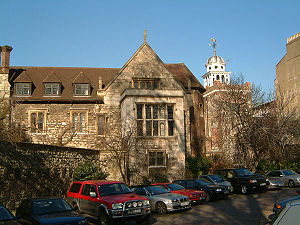
From there, we walked through Smithfield Market which has amazing historic significance, both as a meat processing center as well as the place where William Wallace of Braveheart fame was hung in the 1300’s. Again, there are some architecturally significant Victorian structures, which many developers would love to tear down and replace with mixed use buildings. Ironically, Prince Charles is leading the charge to have these building recognized as historically significant, with some mixed success. So far, his campaign is working, however, stay tuned.
From there, we walked by the Ten Bells Pub, one of the pubs famous for the Jack the Ripper murders, the Barbican Estate – an architectural monstrosity pretty close to the London Wall, some pieces of which date from Roman times. The piece that we came close to was in this picture, and dates from the 13th Century. It is definitely fascinating to see such pieces of history next to some modern architecture.

Then it was on to the Central Line tube, east to Tottenham Court Road Station. I am a complete transit geek, as you will see in more posts on this blog. The London Underground fascinates me with its history, disused stations, complexity and quirky service. I have talked about the public transport here in another post, but, this time I was actually able to see a disused station from a line, thanks to David’s direction (he’s also a transit geek, so, we got along swimmingly). The British Museum station was between Holborn and Tottenham Court Road, and closed in 1933 when the Holborn station was remodeled with new escalators instead of lifts.
We changed to the Northern Line to go to a pub in Kentish Town called the Southampton Arms. This pub has hand pumped ales and ciders that are all from independent brewers local to London. As David said, it isn’t unusual for the farmer’s wife to come into the pub with a pony keg in the back of the truck, directly from the orchard or brewtank. There were multiple different ciders and ales with not a lager in site. It was 5pm, and the place was absolutely packed to the gills with everyone enjoying inexpensive, homecrafted ales and ciders in traditional public house fashion. Great music, awesome conversation and people calling the barmaid “Luv”. This place makes some of the brewpubs and local beer houses – even the famous ones in Portland, OR – look like a McBrewpub. And, yes, that’s amazing.
After two pints there, we headed down to Camden Town, which is where every 19-24 year old with a bit of money goes to get absolutely shitfaced, vomit in the streets, dance, listen to local rock bands and eat cheap Chinese takeaway after spending too much time and money in the pub. Camden Market is the largest public market in London, and I will definitely check it out on a day that I have taken a ton of Xanax and I wish for lots of human contact with hipsters. It will be like an afternoon in Belltown in Seattle. We did have a pint at The Lock Tavern, definitely a hipster place, but I am a sucker for any place that plays 60’s B-side Soul. We both had a bitter, and I saw Leonardo di Caprio heading upstairs to the VIP area as I was heading to the toilet. Definitely hipster cred there.
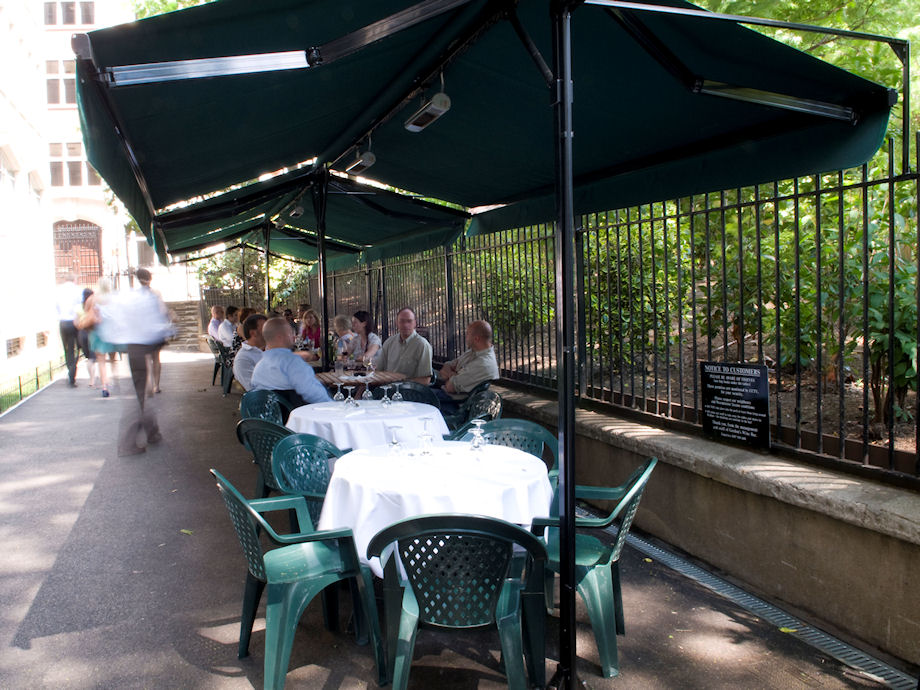
From Camden Town, we headed south to Charing Cross Station to Gordon’s Wine Bar, London’s oldest wine bar since 1890. Gordon’s has a cellar cave that used to open up to the Thames which would allow the tidal flow to move wine barrels into the cellar and then allow for them to be locked up and stored. In present day, they also have a courtyard that has beautiful views of former boat docks for the Duke of Somerset. It is a great place to drink a glass of port, even in 2 degree Celsius weather.
From there, we walked north to Soho to end the evening with the Kings Cross Steelers rugby team at the Duke of Wellington. I met a few of the guys, and plan on going to training with them sometime soon.
This was a great field trip and definitely gave me a history lesson in some things that I normally would not have seen in London.
 American Expat in London